National
Why Thailand Is Avoiding the ICJ, French-Siam Treaties and the 2000 MoU, Analysts Say
PHNOM PENH, Cambodia (Oct.08,2025) — Tensions are rising between Cambodia and Thailand over their long-disputed border, following the first fatal military clash in more than a decade. A Cambodian soldier was killed in May during a skirmish with Thai forces near Preah Vihear province. The incident escalated into a five-day armed confrontation from July 24 to 28, resulting in multiple casualties and prompting international concern.
A cease-fire was brokered in Malaysia, mediated by Prime Minister Anwar Ibrahim, observed by China and reportedly encouraged by U.S. President Donald Trump. The agreement called for an “immediate and unconditional” halt to hostilities. However, the underlying border dispute remains unresolved.
Cambodia Urges ICJ Intervention
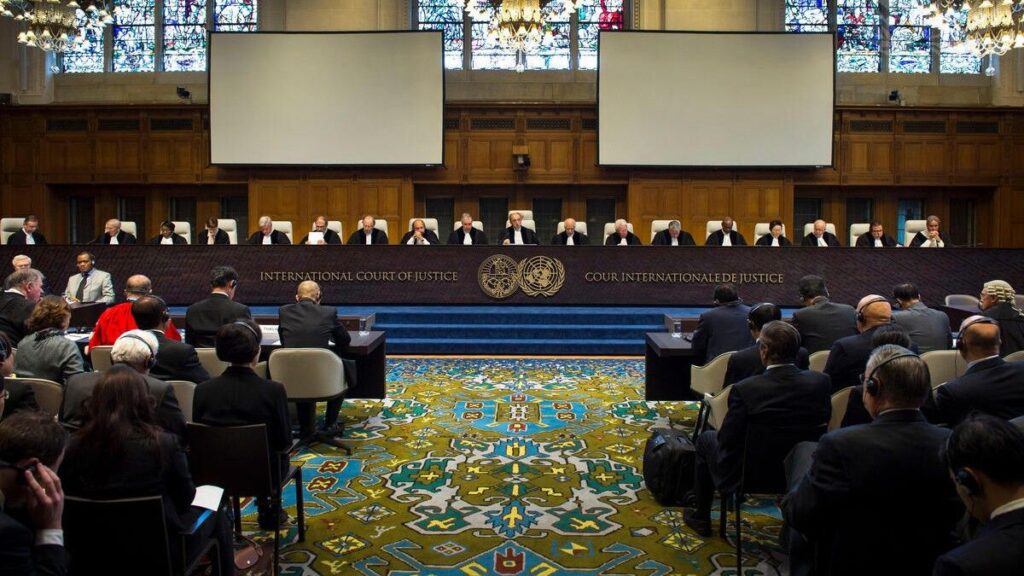
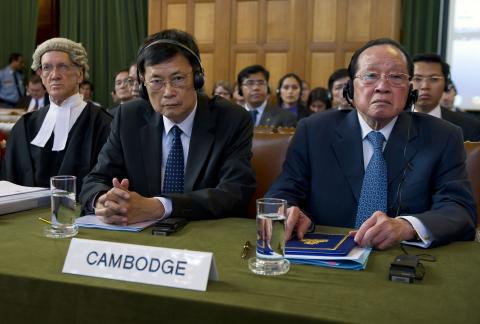
Prime Minister Hun Manet has reiterated Cambodia’s commitment to resolving the dispute through international legal mechanisms, including the International Court of Justice. Cambodia seeks to include several contested sites in the case, such as the Ta Moan Thom and Toch temples, Ta Krabei and the Mom Tei area.
Phnom Penh is urging Bangkok to accept the ICJ’s jurisdiction and abide by its rulings, referencing the court’s 1962 decision that placed the Preah Vihear temple within Cambodian territory, reaffirmed in 2013.
Thailand has rejected this approach, dismissing both the ICJ’s authority and the historical French-Siam treaties of 1904 and 1907, which underpin Cambodia’s claims. Bangkok has also moved to annul a 2000 memorandum of understanding that forms the legal basis for joint border demarcation efforts.
Analysts: Thailand Avoiding Legal Accountability
Kin Phea, director general of the International Relations Institute at the Royal Academy of Cambodia, said Thailand’s attempts to cancel the 2000 and 2001 MoUs are not legally viable.
“These agreements have been registered with the United Nations and constitute binding international treaties,” he said. “Unilateral withdrawal would violate the 1969 Vienna Convention on the Law of Treaties.”
Phea said such a move could justify Cambodia seeking international intervention and damage Thailand’s global reputation.
“It would undermine over two decades of joint progress and compromise opportunities for joint development in contested maritime zones,” he said.
He emphasized that the 2000 MoU outlines the use of 1:200,000 scale maps based on the Franco-Siamese treaties, which are internationally recognized.
“Canceling these MoUs would mean restarting the demarcation process, jeopardizing Cambodia’s territorial integrity and its ability to explore offshore resources peacefully,” he said.
Phea also warned that Thailand’s insistence on using its own 1:50,000 scale unilateral maps could deepen tensions and destabilize the region.
Nationalist Motives and Strategic Calculations
Geopolitical analyst Thong Mengdavid said Thailand’s refusal to recognize international agreements stems from political and strategic motives.
“Thailand’s rejection of ICJ jurisdiction and its dismissal of historical treaties reflect an effort to avoid legal accountability and consolidate control over disputed border areas,” he said.
Mengdavid suggested Thai military and political elites are using the dispute to fuel nationalist sentiment and strengthen domestic support.
He also accused Thai authorities of using the continued detention of 18 Cambodian soldiers as leverage.
“This is an attempt to transform a legal dispute into a political one — where Thailand can exercise military and diplomatic dominance,” he said.
Escalation Despite Cease-Fire
Despite the cease-fire, Cambodian officials allege Thai forces have taken aggressive actions along the border. According to Phnom Penh, Thai troops installed barbed wire and seized land within Cambodia’s provinces of Banteay Meanchey, Oddar Meanchey, Pursat and Koh Kong just hours after the truce took effect.
Cambodian authorities also claim Thailand has attempted to assert control over 17 additional locations by erecting barricades, displacing civilians and expanding its military presence.
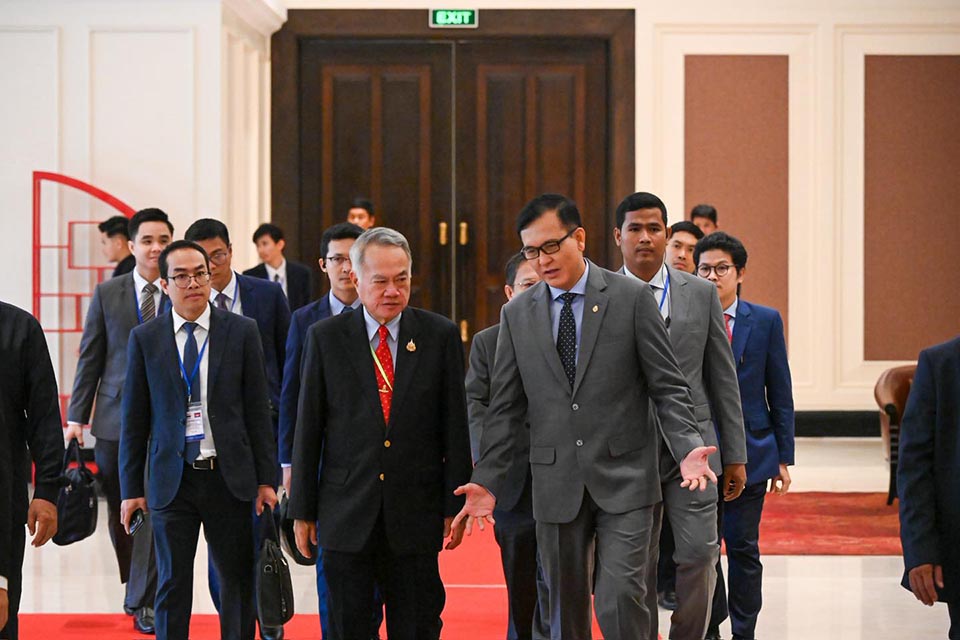
The Cambodian government has filed an urgent appeal to the United Nations, accusing Thailand of violating both the cease-fire agreement and international law.
Hun Manet has raised the issue in meetings with international partners, calling for a peaceful resolution based on legal agreements.
“The protection of national sovereignty and territorial integrity remains a top priority,” a government spokesperson said. “Cambodia continues to pursue peaceful solutions that promote national interests and regional stability.”
The ICJ ruled in 1962 that the 11th-century Preah Vihear temple was located on Cambodian soil, a decision reaffirmed in 2013 following Cambodia’s request for clarification. The original verdict was based on a map provided by Siam — now Thailand — which placed the temple within French-administered territory, a fact Thailand did not dispute at the time.


