Opinion
Opinion: Thailand’s Mine Scenario Is a “Shooting Oneself in the Foot” Strategy
Phnom Penh, Cambodia (Nov. 25, 2025) — Time and again, Thailand has used incidents of its soldiers stepping on mines as a pretext to accuse Cambodia of laying new mines. The objective is clear: to tarnish Cambodia’s image internationally and divert attention from Thailand’s own acts of aggression against Cambodian sovereignty and civilians.
But this tactic is akin to “shooting oneself in the foot.” Thailand’s repeated claims expose its malicious intentions.
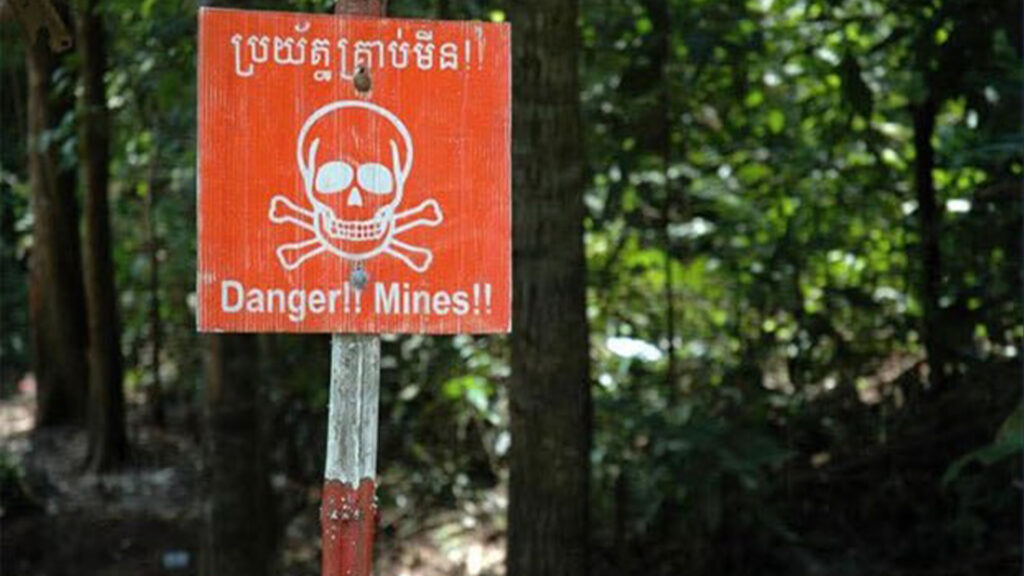
First, Cambodia endured nearly three decades of civil war, leaving vast numbers of landmines and unexploded ordnance along the border. Second, since peace was achieved in the late 1990s, Cambodia has worked tirelessly to clear mines and UXO, removing more than 4 million devices.
As a state party to the Ottawa Convention, Cambodia has become a global model in mine clearance, praised by the United Nations and sought out by other countries for expertise.
Third, if explosions occur on Thai soil, responsibility lies with Thailand, which never experienced civil war. If blasts occur on Cambodian soil, they involve remnants of past conflicts, often triggered by Thai soldiers trespassing during provocative actions.
Fourth, Thailand’s display of “new” mines is more performance than reality. Cambodia seeks peace, not confrontation, while Thailand mobilizes troops, lays barbed wire and provokes clashes.
In sum, exaggerating mine incidents to blame Cambodia is a miscalculated strategy. Analysts and observers recognize Thailand as the provocateur, violating ceasefire agreements and peace declarations. Far from gaining advantage, Thailand’s actions only reinforce the perception that its mine scenario is a case of “shooting oneself in the foot.”
By Vong Makara, Professor and Social and Political Analyst


